


How Shockwave Therapy Supports Injury Recovery
Injuries can affect far more than a single area of the body. A strained muscle, irritated tendon, joint problem, or lingering sports injury can make everyday activities uncomfortable and prevent you from doing the things you enjoy. Even after the initial injury has passed, pain, stiffness, inflammation, and reduced mobility can sometimes continue to interfere with normal movement.
At HealthWorks, our goal is to support the body’s natural ability to recover while helping patients manage pain and restore function. One of the non-invasive therapies available through our services is Shockwave Therapy, also known as Extracorporeal Shock Wave Therapy (EWST). This treatment uses targeted energy waves to stimulate activity in injured tissues and support the healing process.
Shockwave Therapy may be particularly useful for certain soft-tissue and musculoskeletal conditions that have not responded adequately to other approaches. Our treatment options can also be considered alongside other services, including spinal decompression, chiropractic care, EMTT Therapy, Class IV Laser Treatment, and Matrix Treatment, depending on each patient’s condition and goals.
What Is Shockwave Therapy?
Shockwave Therapy is a non-invasive treatment that delivers short bursts of mechanical energy into a targeted area of the body. Rather than requiring surgery or an incision, the treatment is performed externally on the skin over the affected area.
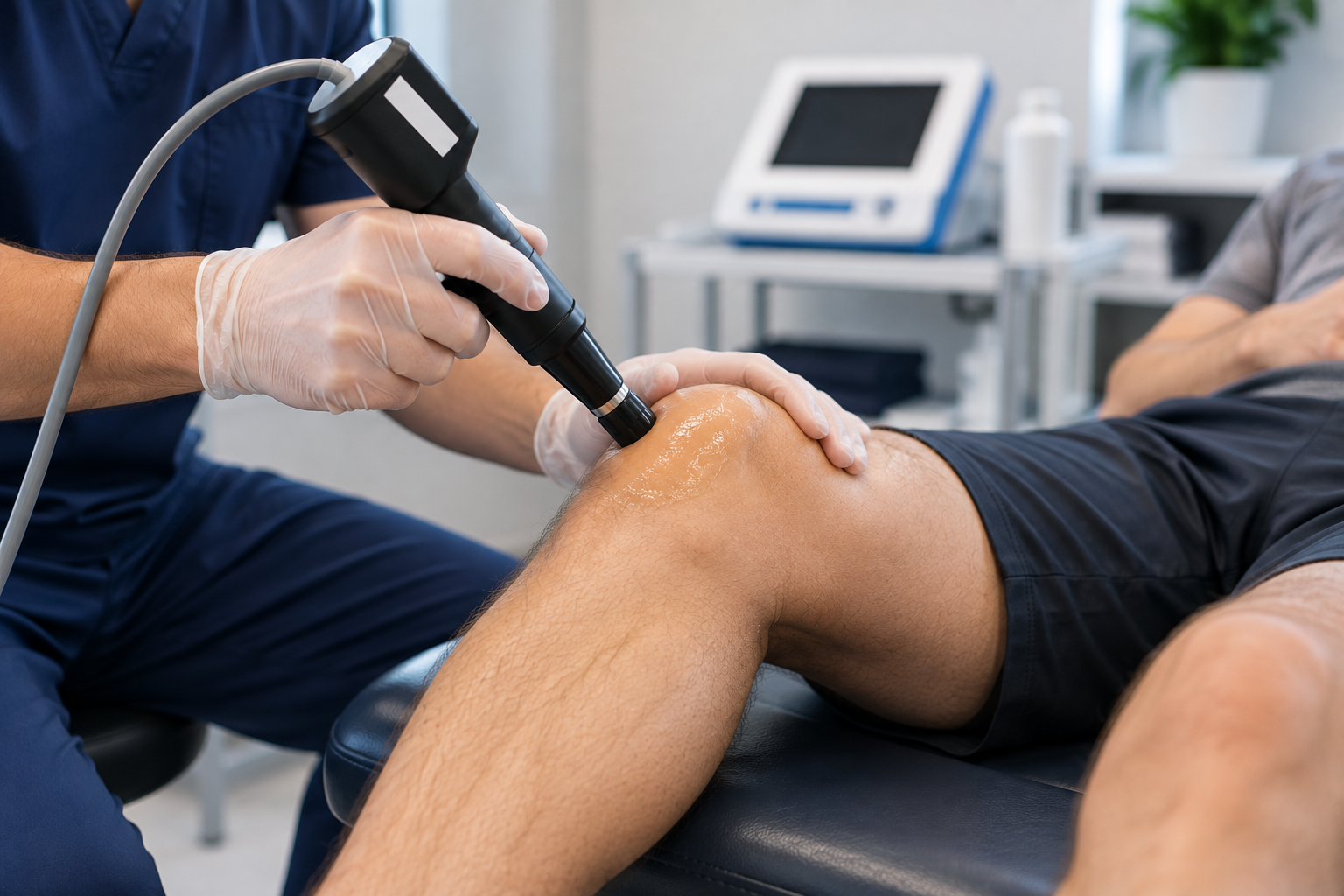
At HealthWorks, the process begins by applying ultrasound gel to the treatment area. A specialized treatment handle is then positioned against the skin, allowing the energy waves to be directed toward the tissues being treated. Patients commonly describe the sensation as rapid tapping or pressure within the tissue.
Shockwave Therapy is not the same as conventional ultrasound therapy. The treatment uses pressure shock waves designed to create a mechanical stimulus within the targeted tissues. This stimulus can encourage biological processes associated with tissue repair and recovery.
The therapy has been used in medicine for decades. It was originally associated with the treatment of kidney stones before being adopted for various musculoskeletal applications, including sports injuries and certain chronic pain conditions.
How Does Shockwave Therapy Support Injury Recovery?
Recovery requires more than simply reducing pain. Healthy tissue function, circulation, mobility, and the body’s repair processes all play important roles. Shockwave Therapy is designed to provide a therapeutic stimulus that may support several of these processes.
1. It May Support Tissue Regeneration
One of the primary reasons patients consider Shockwave Therapy is its potential to stimulate tissue-repair processes.
The pressure waves delivered during treatment create a mechanical stimulus in the targeted area. HealthWorks describes this process as helping initiate a regenerative response that can support the repair of tissue affected by injury or arthritis.
This can be particularly relevant when an injury has become persistent. Some tissues can be slow to recover, especially when they are repeatedly stressed by work, exercise, sports, or everyday movement.
2. It May Help Improve Local Blood Flow
Adequate circulation is an important part of tissue recovery because blood delivers oxygen and nutrients needed by the body.
Shockwave Therapy may support angiogenesis, the formation of new blood vessels, and improved local blood flow. Increased circulation can help create a more favorable environment for tissue recovery.
Improving circulation does not mean that every injury will immediately heal, but supporting the biological environment surrounding damaged tissue can be an important part of a comprehensive recovery strategy.
3. It Can Help Address Scar Tissue
After an injury, the body forms scar tissue as part of the healing process. While scar tissue can be useful, excessive or poorly organized scar tissue may contribute to stiffness, restricted movement, or persistent discomfort.
Shockwave Therapy is designed to help break down scar tissue and adhesions in targeted areas.
By addressing areas of restricted tissue, treatment may help improve mobility and allow the affected region to function more normally.
4. It May Help Reduce Pain
Pain is one of the biggest reasons an injury can interfere with daily life. Even when the original injury is no longer considered acute, ongoing irritation can make movement difficult.
Shockwave Therapy may provide an analgesic effect while also supporting the underlying tissue-recovery process. HealthWorks lists pain relief and reduced inflammatory response among the potential benefits of the treatment.
Rather than focusing solely on temporarily masking discomfort, our approach considers pain as one part of the larger recovery picture.
What Injuries May Benefit From Shockwave Therapy?
Shockwave Therapy is not appropriate for every injury or every patient. However, it may be considered for a range of musculoskeletal conditions.
HealthWorks currently lists several conditions that may be treated with Shockwave Therapy, including:
Plantar fasciitis
Achilles tendonitis
Patellar tendinosis
Tennis elbow
Shoulder pain
Knee pain
Hip pain
Neck pain
Carpal tunnel
Osgood-Schlatter disease
Shockwave Therapy may also be useful when pain has become persistent and conservative approaches have not provided the desired improvement.
The appropriate treatment depends on the location and nature of the injury, how long symptoms have been present, the patient’s health history, and other factors identified during an evaluation.
Shockwave Therapy for Sports Injuries
Athletes place repeated demands on muscles, tendons, ligaments, and joints. A single injury can interrupt training, competition, work, and recreational activities.
Returning to activity too quickly can sometimes place additional stress on an area that has not fully recovered. For that reason, recovery should focus on restoring function rather than simply waiting for pain to disappear.
Shockwave Therapy may be incorporated into a broader recovery plan for certain sports-related conditions. By supporting circulation, tissue regeneration, and mobility, treatment may help create a better environment for recovery.
Our team can evaluate the affected area and determine whether Shockwave Therapy makes sense as part of an individualized treatment plan.
Shockwave Therapy and Chronic Pain
Not every injury heals quickly. Tendon problems, plantar fasciitis, joint discomfort, and other musculoskeletal conditions can become persistent and frustrating.
Chronic pain may also lead to changes in the way a person moves. When movement becomes uncomfortable, it is common to compensate by placing additional stress on other muscles or joints.
A treatment plan that addresses the affected tissues and supports mobility may help interrupt this cycle. Shockwave Therapy provides one non-invasive option for addressing certain chronic musculoskeletal conditions.
The goal is not simply to make an area feel better temporarily. A comprehensive approach considers the underlying condition, movement patterns, contributing factors, and the patient’s overall recovery needs.
How Spinal Decompression May Complement Injury Care
At HealthWorks, Shockwave Therapy is one of several specialized services available for pain and mobility concerns. We also provide Spinal Decompression Therapy, which uses advanced technology to address certain spinal conditions.
Spinal decompression is a non-surgical treatment designed to gently reduce pressure affecting spinal discs and nerves. HealthWorks describes its decompression service as an alternative approach for certain patients dealing with back-related problems.
Shockwave Therapy and spinal decompression serve different purposes. Shockwave Therapy focuses on targeted tissues using pressure waves, while spinal decompression focuses on the spine and can be used as part of care for certain disc-related conditions.
For patients experiencing a combination of soft-tissue problems and spinal discomfort, a customized treatment plan may incorporate different therapies when clinically appropriate.
What Can You Expect During a Shockwave Therapy Session?
Treatment begins with preparation of the area being addressed. Ultrasound gel is applied to the skin, and the treatment handle is positioned over the targeted tissue.
Short bursts of mechanical energy are then delivered into the area. The sensation can feel like rapid tapping or pressure.
Treatment is non-invasive, meaning there is no incision involved. The exact experience can vary depending on the area being treated, the condition being addressed, and the treatment settings selected.
Because every injury is different, treatment plans should be individualized rather than based on a one-size-fits-all schedule.
Why Choose a Non-Invasive Approach?
Many patients want options that do not immediately involve surgery. Non-invasive therapies can provide an opportunity to address certain conditions without an incision or surgical recovery period.
Shockwave Therapy is performed externally and does not require surgery. Depending on the condition, it may be used as part of a conservative care plan designed to support recovery and improve function.
At HealthWorks, we combine Shockwave Therapy with other services when appropriate. Our broader approach includes chiropractic care, spinal decompression, EMTT Therapy, Class IV Laser Treatment, Matrix Treatment, massage therapy, and other services designed around individual patient needs.
A Personalized Approach to Recovery
No two injuries are exactly alike. Two people can experience similar symptoms while having completely different contributing factors.
That is why treatment should begin with understanding the individual’s symptoms, history, affected area, activity level, and goals.
Our team can use that information to determine whether Shockwave Therapy is appropriate and whether other services may complement the treatment plan.
The goal is to provide care that addresses the specific problem rather than simply applying the same treatment to everyone.
Frequently Asked Questions About Shockwave Therapy
Is Shockwave Therapy painful?
Shockwave Therapy can produce sensations ranging from mild discomfort to more noticeable pressure or tapping during treatment. The experience depends on the area being treated and the condition being addressed. Our team can adjust treatment parameters as appropriate.
How long has Shockwave Therapy been used?
Shockwave Therapy has been used in medicine since the 1980s. It initially became associated with kidney stone treatment and later expanded into musculoskeletal applications, including sports injuries and chronic orthopedic conditions.
How many Shockwave Therapy treatments will I need?
The number of treatments varies according to the condition, severity, duration of symptoms, and individual response. Rather than assuming every patient needs the same number of sessions, our team can recommend a treatment plan based on the evaluation.
Can Shockwave Therapy treat tendon problems?
Shockwave Therapy may be used for certain tendon-related conditions. HealthWorks lists Achilles tendonitis, patellar tendinosis, and tennis elbow among the conditions treated with Shockwave Therapy.
Can Shockwave Therapy be used for plantar fasciitis?
Yes. Plantar fasciitis is one of the conditions HealthWorks lists for Shockwave Therapy. Treatment may be considered when persistent heel and foot pain continues to interfere with walking and daily activities.
Is Shockwave Therapy the same as ultrasound?
No. Although ultrasound gel is used during the treatment process, Shockwave Therapy uses pressure shock waves and is different from conventional ultrasound therapy.
Can Shockwave Therapy be combined with other treatments?
Depending on the patient’s condition, Shockwave Therapy may be incorporated into a broader care plan. HealthWorks provides several non-invasive services, including spinal decompression, EMTT Therapy, Class IV Laser Treatment, Matrix Treatment, chiropractic care, and massage therapy.
Conclusion
Recovering from an injury can take time, especially when pain or restricted movement continues long after the initial problem occurred. While rest and conventional approaches can be useful, some patients may benefit from additional therapies designed to support the body’s natural recovery processes.
Shockwave Therapy offers a non-invasive approach that uses targeted pressure waves to stimulate tissues, support circulation, address scar tissue, and encourage regenerative processes. It may be useful for several musculoskeletal conditions, including plantar fasciitis, tendon problems, knee pain, shoulder pain, hip pain, neck pain, and certain sports injuries.
At HealthWorks, our services are designed around individualized care. Along with Shockwave Therapy, we offer spinal decompression, chiropractic care, EMTT Therapy, Class IV Laser Treatment, Matrix Treatment, massage therapy, and other treatment options.
If an injury, chronic pain condition, or mobility problem is keeping you from doing the activities you enjoy, a personalized evaluation can help determine which treatment options may be appropriate.
Our team at HealthWorks, Summerville Disc & Neuropathy Center is ready to help you explore non-invasive options for pain relief, mobility, and injury recovery.
📍 Address: 1240-A Central Ave, Summerville, SC 29483
📞 Phone: (843) 821-8787
🌐 Website: healthworksmed.com
Contact us today to schedule an appointment and learn whether Shockwave Therapy or another one of our services may be appropriate for your condition. Results vary by person, and an individualized evaluation is the best way to determine the right approach for your recovery.